
Minecraft Fishing Rod: The Complete 2026 Guide to Crafting, Enchanting, and Mastering the Waters
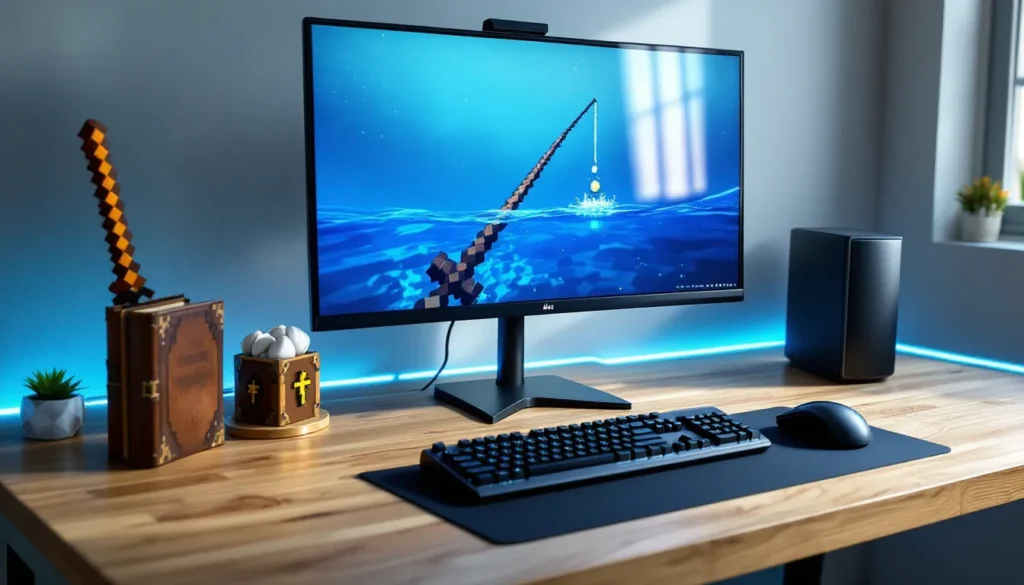
Fishing in Minecraft isn’t just about passing time by the water. It’s a legitimate path to rare enchanted books, name tags, saddles, and even nautilus shells, loot you’d otherwise spend hours dungeon-crawling to find. Whether you’re a survival purist who needs food or a late-game player hunting Mending books, the fishing rod remains one of the game’s most underrated tools.
But there’s more to fishing than right-clicking near water and hoping for the best. From crafting your first rod with sticks and string to stacking the right enchantments and identifying prime fishing spots, this guide covers everything you need to know about the Minecraft fishing rod in 2026. We’ll walk through crafting recipes, the best enchantments to apply, advanced strategies, and even alternative combat uses that most players never discover.
Key Takeaways
- A Minecraft fishing rod requires just three sticks and two strings to craft, making it one of the easiest early-game items to obtain.
- Luck of the Sea III and Lure III enchantments are essential for treasure hunting, boosting treasure catch rates from 5% to over 11% and reducing wait times by 86%.
- Always fish in open water (5×5×4 unobstructed zones) to maximize treasure drops; fishing in small ponds or enclosed spaces yields mostly junk items.
- Mending enchantment makes your fishing rod self-sustaining since fishing grants XP that auto-repairs the rod, eliminating the need for manual anvil repairs.
- Beyond fishing, the Minecraft fishing rod serves as a versatile combat tool in PvP, allowing players to pull enemies toward them or into environmental hazards.
- AFK fishing farms require proper open-water zones post-1.16 to function effectively, making active fishing with Lure III faster and more efficient than outdated automated setups.
How to Craft a Fishing Rod in Minecraft
Required Materials and Resources
To make a fishing rod in Minecraft, players need just two materials: sticks and string. You’ll need three sticks and two pieces of string total.
Sticks are among the easiest items to obtain. Break any wood log, convert it to planks in your inventory crafting grid, then arrange two planks vertically to create four sticks. Any wood type works, oak, birch, spruce, jungle, acacia, dark oak, mangrove, cherry, or bamboo planks all produce identical sticks.
String is slightly trickier. The most common source is killing spiders or cave spiders, which drop 0–2 string each. Alternatively, you can:
- Break cobwebs with a sword (yields one string per cobweb)
- Find string in dungeon, woodland mansion, or bastion remnant chests
- Kill striders in the Nether (rare drop)
- Trade with cats as gifts if you’re patient
If you’re early in survival and haven’t encountered spiders yet, wait until nightfall. They spawn frequently on the surface in low light levels.
Step-by-Step Crafting Instructions
Once you’ve gathered three sticks and two string, open your crafting table (a 3×3 grid is required, you can’t craft a fishing rod in your 2×2 inventory grid).
Arrange materials in this pattern:
- Top row: Place one stick in the top-right corner (third slot)
- Middle row: Place one string in the middle-right slot (sixth slot overall)
- Bottom row: Place one stick in the bottom-left corner (first slot of the row)
- Second stick: Place it in the middle slot (fifth slot overall)
- Second string: Place it in the bottom-right corner (ninth slot)
The fishing rod recipe in Minecraft forms a diagonal pattern from top-right to bottom-left for the sticks, with string filling the right column’s middle and bottom slots. Once placed correctly, the fishing rod appears in the result box. Drag it to your inventory.
Alternatively, if you find a fishing rod in loot chests (underwater ruins are common sources) or from fisherman villagers, you can skip crafting entirely. Fisherman villagers sell enchanted fishing rods for 6–8 emeralds at the Apprentice level.
How to Use Your Fishing Rod Effectively
Basic Fishing Mechanics and Controls
Using a fishing rod is straightforward but requires timing. Equip the rod in your main hand or off-hand, then right-click (or press the use button on console/mobile) while facing any water source. The bobber, a small floating cork, will arc through the air and land in the water.
You can cast into any water block, but the game checks for “open water” when determining loot tables. Open water means a 5×5×4 area around the bobber must be unobstructed water blocks, with no solid blocks or lily pads within two blocks horizontally and no blocks above water level except for air or rain. If you fish in confined pools or next to walls, you’ll catch mostly junk.
The fishing rod has 64 durability by default. Each time you reel in an item, it consumes one durability point. Catching entities (mobs, items, players) with the rod also costs durability, making it wear down faster in non-fishing uses.
Identifying the Perfect Catch Moment
After casting, the bobber floats on the surface. You’ll notice a trail of water particles moving toward it, these indicate fish approaching. The wait time for a bite ranges from 5 to 30 seconds in open water (without Lure enchantment).
Watch for these signals:
- Particle trail intensifies as something gets close
- Bobber dips underwater sharply with a distinct splash sound
- Bubbles appear just before the bite
The moment the bobber submerges and you hear the splash, right-click again immediately to reel in your catch. Timing matters, if you wait too long (more than a second or two), the fish escapes and you’ll have to recast.
Many players fishing while watching streams or videos often use detailed walkthroughs to master mechanics like these across different games, though Minecraft’s fishing timing is more forgiving than most fishing minigames.
When you successfully reel in, the item flies toward you and enters your inventory automatically. Your experience bar also increases slightly, fishing grants 1–6 XP per catch.
Best Enchantments for Fishing Rods
Luck of the Sea: Maximizing Treasure Drops
Luck of the Sea is the premier treasure-hunting enchantment. It comes in three levels (I, II, III) and directly increases your chance of catching treasure while reducing junk.
Without Luck of the Sea, the loot distribution in open water is roughly:
- 85% fish
- 10% junk (damaged boots, sticks, leather, bowls)
- 5% treasure (enchanted books, name tags, saddles, bows, fishing rods)
Luck of the Sea III shifts this dramatically:
- 84.8% fish (slightly reduced)
- 4.2% junk (more than halved)
- 11.3% treasure (more than doubled)
For players hunting Mending books, enchanted bows, or nautilus shells, Luck of the Sea III is non-negotiable. You can obtain it from:
- Enchanting table (requires level 30 enchant for best odds)
- Librarian villager trades
- Combining books in an anvil
- Fishing up enchanted rods and combining them
Lure: Speeding Up Your Fishing Time
Lure is the efficiency enchantment for fishing rods. It reduces wait time between casts by 5 seconds per level, with a maximum of Lure III.
Without Lure, the average wait is 17.5 seconds per catch (range: 5–30 seconds). With Lure III, this drops to an average of 2.5 seconds, making fishing up to 7× faster in optimal conditions.
Lure is essential for:
- XP farming through fishing
- AFK fishing setups (though these have been nerfed)
- Players who find default fishing tediously slow
You can stack Lure with Luck of the Sea on the same rod. The best fishing rod enchantments in Minecraft for treasure hunting are Luck of the Sea III, Lure III, Unbreaking III, and Mending, all on one rod.
Mending and Unbreaking: Keeping Your Rod Forever
Unbreaking III triples the effective durability of your fishing rod by giving each use a 75% chance to avoid consuming a durability point. Since rods only have 64 base durability, Unbreaking III extends this to an average of 256 uses.
Mending is even better for long-term sustainability. Any XP orbs you collect while holding a Mending-enchanted rod automatically repair it (2 durability per XP point). Since fishing itself grants XP, a rod with both Mending and Lure becomes self-sustaining, you’ll never need to craft another one.
The combo of Mending + Unbreaking III + Luck of the Sea III + Lure III is the endgame fishing rod. You can’t get all four from a single enchanting table session due to enchantment conflicts and level caps, so plan to:
- Fish up or trade for enchanted books
- Combine books in an anvil
- Apply the combined enchantment to your rod
- Use an anvil to merge multiple enchanted rods if needed
Alternatively, cure a zombie villager to get a librarian with discounted enchanted book trades, Mending typically costs 10–30 emeralds from normal librarians but can drop to 1 emerald after curing.
What You Can Catch with a Fishing Rod
Fish Types and Food Value
Four types of fish can be caught:
- Raw Cod: Restores 2 hunger points (1 drumstick). Cooks into cooked cod (5 hunger, 6 saturation). Most common fish.
- Raw Salmon: Restores 2 hunger raw, 6 cooked. Slightly rarer than cod.
- Tropical Fish: Restores 1 hunger. Cannot be cooked. Comes in 2,700 color/pattern variants. Mostly decorative or used to breed axolotls and ocelots.
- Pufferfish: Restores 1 hunger but inflicts Poison II (1:00), Hunger III (0:15), and Nausea II (0:15). Only useful for brewing Water Breathing potions.
All fish except tropical fish and pufferfish are solid early-game food sources. Late-game players typically ignore them in favor of golden carrots or steak, but fisherman villagers will buy raw cod and salmon for emeralds.
Treasure Items and Rare Loot
The treasure category includes some of Minecraft’s most valuable items:
- Enchanted books: Any enchantment available to books can appear, including treasure enchantments like Mending, Frost Walker, Soul Speed, and Swift Sneak. Books can have multiple enchantments.
- Enchanted bows: Pre-enchanted with random enchantments, often damaged. Can be repaired in an anvil.
- Enchanted fishing rods: Come with Luck of the Sea, Lure, or Unbreaking. Useful for combining into a god-tier rod.
- Name tags: Essential for naming mobs and preventing despawning. No other renewable source exists.
- Saddles: Required to ride horses, pigs, and striders. Fishing is one of the few renewable methods.
- Nautilus shells: Used to craft conduits (requires 8 shells). Also obtained from drowned mobs but rarer.
- Lily pads: Decorative blocks that spawn naturally in swamps. Fishing is renewable.
According to comprehensive loot analysis from sources tracking game mechanics and drop rates, treasure items make up about 5% of catches in open water without enchantments, rising to over 11% with Luck of the Sea III.
Junk Items and What to Do with Them
Junk catches include:
- Leather
- Leather boots (damaged)
- Rotten flesh
- Sticks
- String
- Water bottles
- Bones
- Ink sacs
- Tripwire hooks
- Bowls
Most junk is low-value, but some items have niche uses:
- Damaged leather boots: Can be smelted for leather nuggets or repaired if enchanted.
- Bones: Convert to bone meal for farming.
- String: Used in crafting and redstone contraptions.
- Water bottles: Starting ingredient for all potions.
Otherwise, junk is best tossed in lava or stored in a junk chest. If you’re fishing with Luck of the Sea III, junk rates drop below 5%, making it a non-issue.
Advanced Fishing Rod Strategies and Tips
AFK Fishing Farms: Are They Still Worth It in 2026?
AFK fishing farms were a staple of Minecraft survival for years. Players built simple contraptions using note blocks, fence gates, and trapdoors to auto-cast and auto-reel fishing rods while the player held down right-click with an autoclicker or weighted key.
Mojang nerfed AFK fishing in the 1.16 Nether Update by introducing the “open water” requirement. AFK farms no longer qualify as open water, meaning they only catch junk items unless redesigned with a 5×5 unobstructed water zone.
As of 2026, AFK fishing farms can still be built in Java Edition by creating a proper open-water column, but they’re:
- Less efficient than they used to be
- Slower than active fishing with Lure III
- Outclassed by villager trading for Mending books and treasure
- Discouraged by server admins who view them as exploits
If you still want to AFK fish, ensure your setup includes a 5×5×4 open water zone around the bobber landing point and use a rod with Lure III to maintain decent catch rates. Most veteran players have moved on to villager trading halls and mob farms for loot instead.
Best Biomes and Locations for Fishing
Fishing mechanics are identical in all biomes, loot tables don’t change based on location. But, some biomes and structures offer better environments for fishing:
- Ocean biomes (any variant): Abundant open water, easy to find valid fishing zones.
- Rivers: Convenient if you’re landlocked, though often narrower.
- Swamps: No loot advantage, but lily pads clutter the surface, clear them first.
- Mushroom fields: Safest biome (no hostile mobs spawn), ideal for peaceful fishing.
- Underwater ruins or ocean monuments: No loot advantage, but atmospheric. Clear blocks above water for open-water status.
Avoid fishing in small ponds, player-made pools, or against walls. The game will flag these as non-open water and reduce treasure chances.
Some players consult tier lists and meta strategies for optimizing game mechanics, and while fishing doesn’t have a tier list per se, open ocean biomes are objectively superior for unobstructed fishing.
Weather and Time Optimization
Weather and time of day do not affect fishing loot or catch rates in Minecraft. Rain, thunderstorms, and nighttime have zero impact on treasure chances or fish spawn rates.
But, rain does slightly increase fishing speed by reducing the minimum wait time from 5 seconds to 4 seconds. It’s a marginal gain but noticeable during long fishing sessions.
Thunderstorms pose the only real risk: lightning can strike within 128 blocks of players in open areas. If you’re fishing during a storm, stay under a roof or tree canopy to avoid being hit. Lightning sets fires and deals 5 hearts of damage, potentially fatal if you’re low on health.
Alternative Uses for Fishing Rods
Combat and PvP Applications
Fishing rods aren’t just for fishing, they’re surprisingly effective in PvP and combat scenarios.
When you hook an entity (player or mob) and reel in, it pulls them toward you and applies a small amount of knockback. This costs 3 durability points per hook but opens tactical opportunities:
- Pulling enemies off ledges: Hook players standing near cliffs or lava pools and yank them into hazards.
- Interrupting attacks: Hooking an enemy mid-swing disrupts their combo and creates spacing.
- Combo setups: Pull enemies toward you, then immediately crit them with a sword or axe. This is a staple of advanced Minecraft PvP.
- Environmental kills: Pull mobs into cacti, fire, or fall damage traps.
The fishing rod is a secondary weapon in PvP kits alongside swords, bows, and shields. Skilled players weave rod hooks between attacks to control spacing and reset enemy positioning. Since rods have no attack cooldown in Java Edition, you can hook instantly after swinging a weapon.
In Bedrock Edition, fishing rods hook entities but deal no damage, making them purely utility items.
Mob Manipulation and Redstone Contraptions
Fishing rods can hook and pull most mobs, including:
- Creepers (pull them away before they explode)
- Endermen (hook them but they may teleport)
- Ghasts (pull them from the air for easier kills)
- Villagers (move them without minecarts or boats)
- Animals (herd them into pens)
This makes fishing rods useful for mob sorting, villager relocation, and emergency crowd control.
Redstone engineers also use fishing rods to trigger pressure plates, tripwires, or other mechanics from a distance by hooking and reeling dropped items across them. It’s a niche use but occasionally relevant in puzzle maps or adventure mode contraptions.
How to Repair and Maintain Your Fishing Rod
Anvil Repairs vs. Grindstone Options
Fishing rods can be repaired in three ways: anvil, grindstone, or Mending enchantment.
Anvil repairs allow you to combine two damaged fishing rods to create one with restored durability equal to the sum of both rods’ remaining durability plus a 5% bonus. This preserves enchantments from both rods (if compatible) and merges them.
Example: Combining a fishing rod at 15 durability with one at 20 durability yields a rod with roughly 37 durability (15 + 20 + 5% bonus). If both rods have Lure II, the result has Lure III.
Anvil repairs cost XP levels, starting at 1 level but increasing each time the same item is repaired (“prior work penalty”). After 6–7 repairs, the cost exceeds 39 levels and the anvil refuses further repairs with a “Too Expensive.” message.
Grindstone repairs combine two fishing rods similarly but remove all enchantments. This is only useful for unenchanted rods or if you want to reset a rod and re-enchant it fresh. Grindstone repairs are free (no XP cost) but strip enchantments, making them a bad choice for valuable rods.
Mending bypasses both methods entirely by auto-repairing the rod whenever you collect XP orbs while holding or wearing it. Since fishing itself grants XP, Mending rods are self-sustaining, fish normally and your rod never breaks.
Combining Fishing Rods for Better Durability
If you fish frequently without Mending, you’ll accumulate multiple damaged rods (either from crafting or fishing up enchanted ones). Combining them intelligently saves resources.
Strategy:
- Sort by enchantment quality: Prioritize rods with Luck of the Sea and Lure.
- Combine in pairs: Use the anvil to merge two damaged rods of similar enchantments.
- Avoid over-repairing: Once a rod hits “Too Expensive.” status, retire it or use it as a sacrifice rod in one final merge.
- Fish for replacements: Enchanted rods from treasure catches can replace heavily repaired ones.
Once you have a god-tier rod (Luck III, Lure III, Unbreaking III, Mending), you’ll never need another fishing rod again. Protect it like you would diamond tools.
Common Fishing Rod Mistakes to Avoid
New and even experienced players make recurring mistakes with fishing rods:
Fishing in enclosed spaces: Small ponds, 2×2 pools, or water next to walls don’t count as open water. You’ll catch 90% junk. Always fish in open ocean or rivers with 5×5 unobstructed zones.
Not using enchantments: Fishing without Luck of the Sea III is a waste of time if you’re after treasure. The difference between base 5% treasure rate and 11% with Luck III is massive over hundreds of catches.
Ignoring Mending: Repairing rods manually in an anvil wastes XP and hits the “Too Expensive.” cap. Get Mending on your rod as soon as possible.
Reeling too early or late: If you reel before the bobber dips, nothing happens and you waste time. If you wait too long after the dip, the fish escapes. Practice the timing.
Using rods as weapons without Unbreaking: Hooking mobs costs 3 durability per hook. Without Unbreaking III, a 64-durability rod lasts only 21 hooks. If you plan to use rods in PvP, enchant them accordingly.
Fishing AFK without open water: Post-1.16, AFK farms must include proper open-water zones or they’ll only catch junk. Many players build outdated designs and wonder why they get trash loot.
Not combining enchanted rods from fishing: If you fish up an enchanted rod, don’t trash it. Combine it with your main rod in an anvil to transfer enchantments or boost levels.
Fishing without Lure in multiplayer: If you’re fishing alongside others or need quick XP, Lure III reduces wait time by 86%. The difference between 17 seconds per catch and 2.5 seconds is night and day.
Avoid these pitfalls and your fishing sessions will be far more productive.
Conclusion
The Minecraft fishing rod remains one of the game’s most versatile and underappreciated tools. From humble beginnings, three sticks and two string, it evolves into a treasure-hunting powerhouse once you stack Luck of the Sea III, Lure III, Unbreaking III, and Mending.
Whether you’re farming Mending books, pulling enemies into lava in PvP, or just enjoying a quiet session by the ocean, the fishing rod delivers value at every stage of survival. Focus on open-water fishing zones, prioritize the right enchantments, and avoid the common mistakes outlined above.
Now grab your rod, find a good spot by the water, and start reeling in the loot. The ocean’s full of surprises, and with the right setup, most of them will be worth your time.
 Stonecutter Recipe: Complete Crafting Guide for Minecraft 2026
  How to Make Cake in Minecraft: A Complete Crafting Guide for 2026
  How to Craft a Cake in Minecraft: The Complete Recipe Guide for 2026
  How to Craft an Armor Stand in Minecraft: A Complete Recipe & Usage Guide
  How To Make a Cake In Minecraft: Complete Crafting Guide for 2026
  Minecraft Recipe Book: The Ultimate Guide to Unlocking and Mastering Crafting in 2026