
How to Build a Minecraft Nether Portal in 2026: Complete Step-by-Step Guide
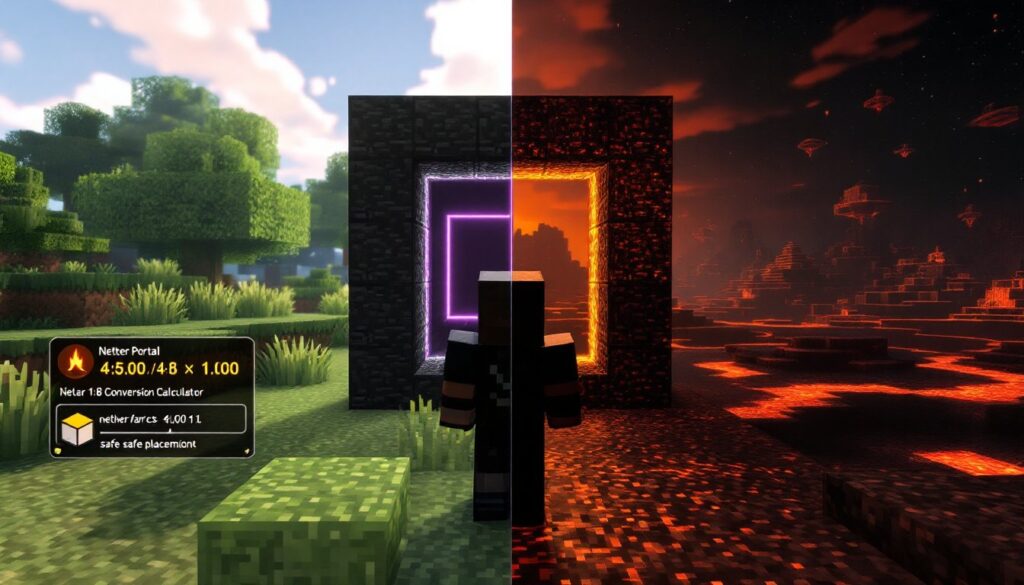
A Minecraft nether portal is your gateway to one of the game’s most dangerous and rewarding dimensions. Whether you’re after blaze rods, ancient debris, or just need a shortcut across your world, you’ll need to build one. The good news? It’s straightforward once you know the mechanics. This guide covers everything from gathering obsidian to activating your portal and avoiding common pitfalls that can strand you in the Nether. We’ll also touch on nether portal designs and the nether portal calculator trick that keeps your portals linked correctly.
Key Takeaways
- A Minecraft nether portal requires a minimum 4×5 obsidian frame with a 2×3 empty interior, activated with flint and steel to access the Nether’s exclusive resources like blaze rods and ancient debris.
- Understand the 1:8 coordinate scale—one block in the Nether equals eight in the Overworld—and use a nether portal calculator to ensure portals link correctly and avoid stranding yourself.
- Build safe portal rooms using non-flammable blocks like cobblestone, carry backup flint and steel, and protect your nether portal from ghasts and piglins to maintain fast travel access between dimensions.
- Common mistakes like building over lava, using flammable materials, ignoring frame dimensions, or not breaking old portals can waste resources and trap you in dangerous situations.
- A well-planned nether portal hub with multiple calculated portals dramatically cuts exploration time and provides efficient access to different Overworld regions for survival and resource gathering.
What Is the Nether Portal and Why You Need One
The Nether is Minecraft’s hellish alternate dimension filled with rare resources and unique mobs. A nether portal is a player-built obsidian frame that creates a gateway between the Overworld and the Nether. Once activated, stepping through teleports you instantly to the other dimension.
Why bother? The Nether holds exclusive loot: blaze rods (for brewing and the End), nether quartz, glowstone, nether wart, and ancient debris (the only source of netherite). Beyond resources, the Nether operates on a 1:8 coordinate scale, one block traveled in the Nether equals eight blocks in the Overworld. This makes nether portals invaluable for fast travel. Building a well-planned nether portal hub can cut exploration time dramatically.
You’ll need this dimension regardless of your playstyle: survival players can’t progress without blaze rods for the End, and even creative builders benefit from the unique blocks and materials available. The portal itself is surprisingly forgiving to build, but mistakes in placement or linking can be costly.
Materials Required to Craft Your Portal
Building a nether portal demands obsidian and a way to light it. Here’s what you’ll need:
Obsidian blocks (minimum 10–14, depending on corner placement): Obsidian only drops with a diamond pickaxe or better. Mine it near lava lakes, lava flows into water create obsidian blocks. Alternatively, search for ruined portals scattered across the Overworld: these partially-formed portals let you salvage obsidian without mining.
Flint and Steel (1 iron ingot + 1 flint): Flint drops from gravel (4 blocks dropped typically yield 1 flint). Iron is everywhere. The crafting recipe is shapeless, so order doesn’t matter.
Supporting materials (optional but recommended): Torches help you navigate and mark your portal location. Cobblestone or stone blocks protect your Nether-side portal from ghasts and lava. Some players craft multiple flint and steel in case ghasts disable the portal, you’ll need another one to re-ignite it. Armor, a pickaxe, sword, bow, and food are essentials for Nether survival, but those aren’t part of the portal itself.
Building Your Nether Portal: Step-by-Step Instructions
Assembling the Obsidian Frame
The frame must be a vertical rectangle with an interior of at least 2×3 blocks (the actual portal field). That means your obsidian frame footprint is 4×5 blocks when you include the frame itself. Maximum interior size is 23×23 blocks, though that’s rarely practical.
Here’s the layout:
- Place obsidian in a rectangle shape on flat ground.
- Leave the interior completely empty, this is where the purple portal field spawns.
- Corners are optional: game-generated portals usually include them, but manually-built portals function fine without them.
- The frame must be perfectly rectangular. Circles, L-shapes, or irregular layouts won’t activate.
Example of a minimal 4×5 frame:
O O O O

O . . O

O . . O

O . . O

O O O O
(O = obsidian, . = empty interior)
Place your frame away from flammable blocks like wood or leaves, especially if you’re building in the Overworld. Fire spreads easily, and you don’t want your portal destroyed before you even light it.
Activating Your Portal With Flint and Steel
Once your frame is complete, equip flint and steel. Right-click (or use, depending on your platform) on any obsidian block inside the empty frame. You’ll see a purple and black swirling field appear, that’s your active portal.
The portal can be disabled if ghasts shoot fireballs at it or if other explosions occur. If it goes out, just right-click again with flint and steel to re-light it. This is why carrying a backup flint and steel in the Nether is smart.
Step into the portal field and hold still for a moment. Your screen will flash, and you’ll teleport to the linked location in the Nether (or vice versa if you’re already in the Nether). The first time you enter, the game generates a new portal in the Nether at linked coordinates.
Tips for Safe and Efficient Nether Travel
Smart nether portal placement and strategy separates seasoned players from beginners. Here are key tactics:
Understand the coordinate math: This is where a nether portal calculator becomes your best friend. Divide your Overworld X and Z coordinates by 8 to find where you’ll spawn in the Nether. Conversely, multiply Nether coordinates by 8 to find the Overworld link. Match Y (height) as closely as possible for consistent links. Recording your coordinates prevents portal mishaps.
Build a safe room around your Nether-side portal. Use non-flammable blocks like cobblestone or stone. Ghasts shoot fireballs from above, and lava is everywhere. A simple 5×5 room with a door keeps threats at bay while you organize your inventory.
Consider the Nether ceiling strategy: The Nether has a solid ceiling at Y=120. Building portals up there and carving tunnels creates a safe travel hub. Mobs can’t spawn on solid blocks, making the ceiling one of the safest building zones.
Carry the essentials: Flint and steel (backup pair), building blocks, food, full armor, a pickaxe, and a bow. Ghasts are vulnerable to arrows, and you’ll need a pickaxe for obsidian or debris mining.
Protect your portals: Use doors, fences, or walls to keep mobs like piglins and hoglins away. These creatures can accidentally trigger the portal and strand themselves in your base, causing chaos.
Create a nether hub: Multiple portals at calculated coordinates let you access different Overworld regions instantly. This is the meta for efficient travel and resource gathering.
Common Mistakes to Avoid When Creating Portals
Even experienced players slip up. Here’s what to watch out for:
Wrong frame size or shape: Non-rectangular frames or portals smaller than 2×3 won’t activate. The game won’t give you an error, it just won’t work. Always double-check your frame dimensions before lighting it.
Ignoring the 1:8 coordinate ratio: This is the biggest trap. If you build a portal in the Overworld at coordinates (400, 100, 400), it links to (50, 100, 50) in the Nether. Forgetting this math means portals won’t link where you expect. If you later build another portal without accounting for this scale, you’ll end up with unintended links or new portals spawning in bad locations.
Building over lava or exposed on cliffs: The Nether is 90% danger. Building your portal on an exposed cliff or directly over lava is a recipe for disaster. You’ll spawn, take fall damage, and plunge into lava before you can react.
Surrounding portals with flammable blocks: Wood and leaves catch fire from ghast fireballs. In the Nether, this destroys your structure and can disable the portal. Stick to stone, cobblestone, or non-flammable alternatives.
Forgetting flint and steel in the Nether: If a ghast disables your portal and you don’t have flint and steel, you’re stuck. Always carry at least one backup pair.
Not breaking old portals when relocating: If you build multiple portals without breaking the old ones, they persist in the world and can cause confusing links. Clean up old portals to keep your coordinate system sane. Consult nether portal designs and planning guides, they emphasize this step for good reason.
 Sheep In Minecraft: Your Complete Farming & Breeding Guide For 2026
  Minecraft Saddle Recipe: Why You Can’t Craft One and How to Get It Fast in 2026
  The Ultimate Guide to Minecraft Farms: Boost Your Survival Game in 2026
  How to Breed Villagers in Minecraft: A Complete Guide for 2026
  The Complete Guide to Minecraft Farms: Build, Automate, and Maximize Your Yields in 2026
  Minecraft Potion Recipes: The Complete Brewing Guide for 2026