
Minecraft Villager Jobs: Complete Guide to Profession Blocks and Trading in 2026
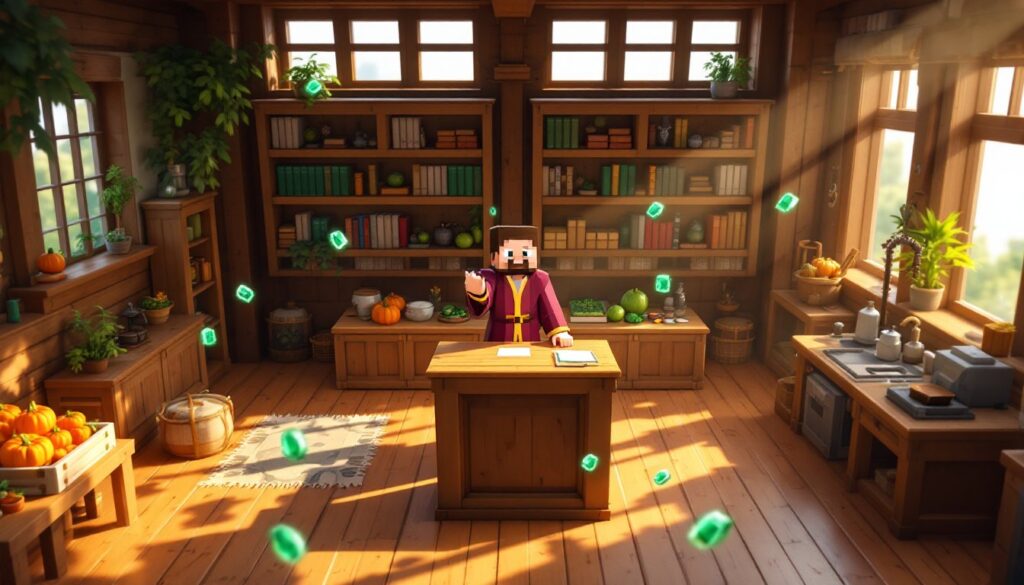
In Minecraft, every villager you meet falls into one of two camps: they’ve got a job, or they’re just wandering around unemployed. A minecraft villager job determines what trades they offer, which items you can access, and how crucial they become to your survival strategy. Whether you’re hunting for a Mending book from a Librarian or stocking up on crops from a Farmer, understanding villager professions is the difference between grinding for hours and progressing efficiently. This guide covers all villager job site blocks, profession assignments, and the best trading strategies to maximize your resource gains in 2026 versions (Java and Bedrock 1.20–1.21).
Key Takeaways
- Minecraft villager jobs determine available trades, resource access, and progression efficiency—understanding professions separates efficient players from endless grinders.
- Each profession ties to a specific job site block: place the block near an unemployed villager, and they instantly claim that profession and its unique trade inventory.
- Librarians are the most valuable villager profession, offering exclusive enchanted books like Mending and Unbreaking that you cannot obtain naturally in vanilla survival mode.
- Once you trade with a villager, their profession locks permanently—test trades carefully before committing, especially with Librarians seeking specific enchanted books.
- Zombie villager curing provides 50% permanent trade discounts, making expensive items like Mending books drastically cheaper and enabling controllable resource economy.
- Critical professions to prioritize are Farmer (renewable food), Cleric (ender pearls), and gear traders (Toolsmith, Armorer, Weaponsmith) for scaling resource and equipment gains.
What Are Minecraft Villager Jobs and Why They Matter
Villager professions aren’t just flavor, they’re core to progression. When a villager claims a profession block nearby, they lock into a specific role with unique trade inventory. A Farmer trades food and crops, a Toolsmith sells diamond tools, and a Librarian (the real MVPs) can provide enchanted books you’d otherwise never find in survival mode.
Trades grant both emeralds and experience, and higher-level villagers unlock better deals. Beyond gear and resources, villagers create renewable supply chains. Need infinite enchanted books? Find a Librarian. Want steady food income without farming? Trade with a Butcher or Fisherman. This system lets you skip tedious grinding and focus on building or combat.
Professions also gate access to rare items. Ender pearls, mending books, and name tags all come from villager trades, some nowhere else in vanilla survival. Curing zombie villagers gives massive discounts (up to 50% off), turning expensive trades into incredible deals. Mastering villager job mechanics means controlling your economy.
All Villager Professions and Their Profession Blocks
Each profession ties to a specific work block. Place the block, an unemployed villager nearby claims it, and boom, instant profession. Here’s the full roster for Java and Bedrock (1.20–1.21):
Armorer – Blast Furnace | Butcher – Smoker | Cartographer – Cartography Table | Cleric – Brewing Stand | Farmer – Composter | Fisherman – Barrel | Fletcher – Fletching Table | Leatherworker – Cauldron | Librarian – Lectern | Mason (Stone Mason in Bedrock) – Stonecutter | Shepherd – Loom | Toolsmith – Smithing Table | Weaponsmith – Grindstone
Two special cases: Nitwit villagers (born green-robed) never take a profession and can’t work. Unemployed villagers have no job block yet but will claim the next available one.
Farmer, Librarian, and Cleric Jobs
Farmer stands out for renewable resources. Early levels trade crops (wheat, carrots, potatoes, beetroot) for emeralds. Higher levels unlock pumpkins, melons, and eventually golden carrots and glistering melon slices. Feed a Farmer, and you’ll never starve.
Librarian is arguably the most valuable profession in the game. They trade books, paper, and enchanted books, including Mending, Unbreaking, Protection, and Sharpness. No other villager or natural spawn offers Mending consistently. A single Librarian with the right trade can save weeks of grinding.
Cleric specializes in potions and rare materials. They buy rotten flesh and gold ingots (great emerald farms) and sell redstone, lapis, glowstone, and crucially, ender pearls, essential for the Nether and End. High-level Clerics unlock nether wart and other potent goods.
Trader and Crafting Professions
“Trader” professions focus on resource exchange: Farmer, Librarian, Cleric, Fletcher, Fisherman, Butcher, Cartographer, Shepherd, Leatherworker. They mostly buy and sell items without crafting them.
“Crafting” professions gear you up directly: Armorer, Toolsmith, Weaponsmith, Mason. These buy raw materials and emeralds, then sell enchanted gear. Armorers offer diamond armor: Toolsmiths sell diamond tools: Weaponsmiths provide diamond swords and axes. Mason handles stone variants.
Cartography is a hybrid, they sell maps to mansions and ocean exploration. Fletcher trades sticks for emeralds (one of the easiest early farms). Shepherd handles wool and dyes.
How to Assign and Change Villager Professions
Assigning professions is straightforward but irreversible if you’re not careful.
The basic mechanic: Unemployed villager + unclaimed profession block within range = instant profession claim. Place a Lectern, an unemployed villager nearby detects it, and they become a Librarian. The block must be accessible, villagers can pathfind to it, during work hours (roughly 2,000 to 9,000 game ticks, or daytime).
Changing professions is trickier. If you haven’t traded with a villager yet and their profession block is destroyed, they return to unemployed status. Place a new block, they’ll attempt to claim it. This lets you reroll until you get the trades you want, critical for Librarians, since you need specific enchanted books.
The lock-in point: Once you trade (even once), that villager’s profession is locked permanently. You cannot change it, so be strategic. Test trades before committing, especially with Librarians. Find the right enchanted book, trade once to lock, then farm emeralds.
Nitwits and edge cases: Green-robed Nitwits never accept any block. They’re unemployable. Unemployed villagers need a block to take a profession, they won’t claim one if they can’t pathfind or if it’s claimed by another villager.
Best Trading Strategies and Valuable Deals
Mastering trades separates efficient players from grinders.
Leveling basics: Villagers level from Novice → Apprentice → Journeyman → Expert → Master. Each level unlocks new trades and better pricing. Trade repeatedly to rank them up, a Master Librarian offers deals a Novice never would. Wear the appropriate job block profession’s gear (e.g., armor for Armorers) to boost reputation.
Librarian strategy: This is non-negotiable. Farming efficiency depends on locking in key enchanted books: Mending, Unbreaking III, Protection IV, Silk Touch, Fortune III. Create multiple Librarians, each with a different book. Break their blocks, reroll trades until the right book appears, trade once to lock. Takes time upfront but pays dividends for months.
Farmer economy: Farmers buy crops and sell food. Build a crop farm, trade stacks of pumpkins or melons to a Farmer for emeralds, then use those emeralds at other traders. Pumpkins and melons are bulky but renewable, this scales infinitely.
Cleric for ender pearls: Early-game, this is key. Clerics buy rotten flesh (killing zombies yields this freely). Trade a stack of rotten flesh for emeralds, then buy ender pearls at higher levels. Solves the travel-to-the-End problem without RNG.
Gear traders: Toolsmith, Armorer, Weaponsmith. They’re expensive (20+ emeralds per item), but diamond gear beats hours of mining. Once you’re established, buying enchanted diamond gear beats crafting it. Weaponsmiths can offer enchanted diamond axes, rare and powerful.
Zombie villager curing: This is the exploit/feature that breaks the economy. Find a zombie villager, throw a weakness potion at it, feed it a golden apple. It converts back and offers 50% trade discounts forever. A Mending book that costs 30+ emeralds drops to 15. Massively broken, widely used, totally legit.
Cartographer note: They sell maps to mansions (Loot and Illager farms) and ocean monuments (Guardians). These maps are unmissable for end-game structure farms. Trade emeralds for maps, then execute the farm.
You can also find game modification tools to customize villager trades in survival servers or personal worlds if you’re experimenting with balance.
Conclusion
Minecraft villager jobs form the backbone of efficient progression. Master the block assignments, lock in critical professions (Librarian, Farmer, Cleric, Armorers), and exploit zombie villager curing for discounts. Control your professions, and you control your economy. No grinding, no RNG, just smart trades and steady returns.
 Sheep In Minecraft: Your Complete Farming & Breeding Guide For 2026
  Minecraft Saddle Recipe: Why You Can’t Craft One and How to Get It Fast in 2026
  The Ultimate Guide to Minecraft Farms: Boost Your Survival Game in 2026
  How to Breed Villagers in Minecraft: A Complete Guide for 2026
  The Complete Guide to Minecraft Farms: Build, Automate, and Maximize Your Yields in 2026
  Minecraft Potion Recipes: The Complete Brewing Guide for 2026