
Minecraft Potion Recipes: The Complete Brewing Guide for 2026
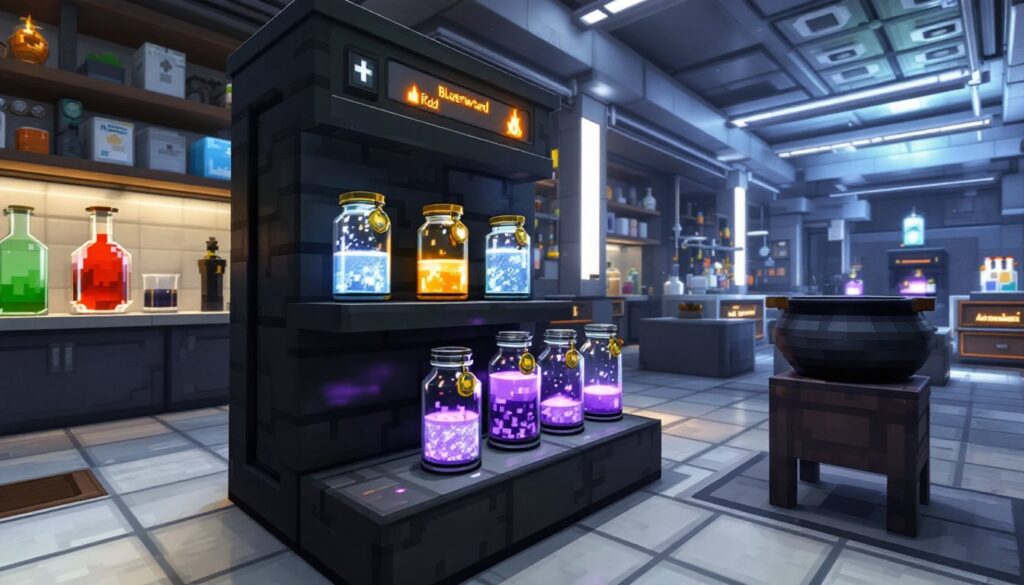
Brewing potions is one of the most rewarding, and underrated, mechanics in Minecraft. Whether you’re gearing up for an end-game boss fight, exploring dangerous caves, or just want to survive the Nether, the right minecraft potion <a href="https://high-tech-inspections.com/2026/03/25/boat-recipe-minecraft-the-complete-2026-guide-to-crafting-and-using-every-boat-type/”>recipe can mean the difference between victory and a trip back to your spawn point. This guide covers everything you need to master potion brewing across Java and Bedrock editions (1.21 era), from basic setup to advanced upgrades and special potion types that’ll have you prepared for anything the game throws at you.
Key Takeaways
- Master your minecraft potion recipe by starting with a Brewing Stand (1 Blaze Rod + 3 Cobblestone), Nether Wart base, and Glass Bottles filled with water—the essential ingredients for any potion.
- Transform Awkward Potions into powerful effects by adding specific reagents like Sugar for Swiftness, Blaze Powder for Strength, or Magma Cream for Fire Resistance, each providing critical survival advantages.
- Enhance your potions strategically using either Redstone Dust to extend duration (roughly 2.67x longer) or Glowstone Dust to amplify effect level, but never combine both on the same potion.
- Convert positive potions to negative ones using Fermented Spider Eye—turn Night Vision into Invisibility or Healing into Harming—perfect for PvP tactics without brewing from scratch.
- Create advanced potion variants by adding Gunpowder for Splash Potions, Dragon’s Breath for Lingering Potions, or crafting Tipped Arrows from Lingering Potions to apply effects on hit with maximum efficiency.
Essential Brewing Setup And Ingredients
Before you can brew anything, you need the right infrastructure. Setting up your brewing station takes just a few minutes but saves hours later.
Base Ingredients And Modifiers
Start by crafting a Brewing Stand: combine 1 Blaze Rod with 3 Cobblestone (or Blackstone) in a crafting grid. This is your core brewing tool. You’ll also need Glass Bottles, arrange 3 glass blocks in a “V” shape to create them. Fill your bottles at any water source or use a cauldron (7 Iron Ingots in a “U” shape) if you want to save water in a compact setup.
Fuel matters. Blaze Powder powers your brewing stand (2 powder per Blaze Rod), so stock up early. Without it, potions won’t brew.
The foundation of almost every potion starts with Nether Wart, which turns Water Bottles into Awkward Potions, your base potion. This is essential. Two modifiers extend or enhance potion effects:
- Redstone Dust: Extends potion duration (roughly 1.5x longer). Strength becomes 8:00 instead of 4:00.
- Glowstone Dust: Amplifies effect level but cuts duration in half. Strength II lasts only 1:30 instead of 4:00.
Note: You can’t stack both modifiers on the same potion. Choose duration or strength, not both.
Effect Ingredients And Converters
Once you have an Awkward Potion, add a reagent to create your effect. The core ingredients are straightforward:
- Sugar → Swiftness (Speed boost)
- Rabbit’s Foot → Leaping (Jump higher)
- Glistering Melon Slice → Healing (Instant health)
- Ghast Tear → Regeneration (Health regen over time)
- Blaze Powder → Strength (Melee damage boost)
- Magma Cream → Fire Resistance (Immunity to fire/lava)
- Golden Carrot → Night Vision (See in darkness)
- Pufferfish → Water Breathing (Breathe underwater)
- Phantom Membrane → Slow Falling (Gentle descent)
- Turtle Shell → Turtle Master (Resistance + Slowness combo)
Fermented Spider Eye is your corruption tool. Add it to an Awkward Potion or any positive effect potion to flip it negative:
- Night Vision + Fermented Spider Eye = Invisibility
- Healing + Fermented Spider Eye = Harming
- Swiftness + Fermented Spider Eye = Slowness
These converters let you create harmful potions for PvP or experiments without brewing everything from scratch.
Brewing Base And Effect Potions
The brewing sequence is always the same. Consistency is key here.
- Load water bottles: Place up to 3 Glass Bottles filled with water into the bottom slots of your Brewing Stand.
- Add fuel: Drop Blaze Powder into the fuel slot. You’ll see particles indicate it’s active.
- Add Nether Wart: Place Nether Wart in the top slot. After a few seconds (usually 20 ticks), all three bottles transform into Awkward Potions.
- Add your main reagent: Place your effect ingredient (Sugar, Rabbit’s Foot, etc.) in the top slot. The potions brew again and gain their effect.
- Optional enhancement: Add Redstone for duration or Glowstone for level II.
- Optional conversion: Add Gunpowder to turn drinkable potions into Splash Potions, or add Dragon’s Breath to Splash Potions to create Lingering Potions.
Timing varies: Nether Wart takes 10 seconds: reagents usually take 20-30 seconds. Multiple batches in parallel speed things up, fill all three bottles before adding fuel.
Positive And Negative Effect Potions
Positive effects are your survival toolkit:
- Swiftness: Essential for outrunning mobs or covering distances fast.
- Strength: Increases melee damage: critical for boss fights.
- Regeneration: Passive healing over 45 seconds (useful paired with armor).
- Fire Resistance: Required for Nether exploration: protects you from lava damage and fire.
- Night Vision: Navigate dark caves without torches.
- Water Breathing: Explore ocean monuments or underwater structures.
- Slow Falling: Negate fall damage (ironically less useful since Elytra is faster, but situationally valuable).
- Turtle Master: Grants both Resistance IV and Slowness IV, counterintuitive but powerful for tanking damage.
Negative potions are rarer but useful in PvP or multiplayer pranks:
- Harming: Instant damage (opposite of Healing).
- Poison: Damage over time (can’t kill you, caps at 0.5 health).
- Slowness: Slows movement and mining.
- Weakness: Reduces melee damage output.
Other effects like Blindness, Nausea, and Wither exist in command-only or experimental modes and aren’t obtainable through standard brewing.
Enhancing And Upgrading Your Potions
Once you’ve brewed a base effect potion, you can upgrade it in two ways, but not both simultaneously.
Redstone Extension: Doubles or extends potion duration. A 3:00 Strength potion becomes 8:00 (roughly 2.67x). For long adventures or boss prep, this is invaluable. Redstone is abundant near Y-level 64 and below, so stock up without worry.
Glowstone Amplification: Bumps the effect to Level II, reducing duration by half. Strength II lasts 1:30 but hits harder than Level I Strength. This is pure offense, useful in PvP or tight combat scenarios where overkill matters more than longevity.
Trade-off: You cannot combine Redstone and Glowstone on the same potion. This is a hard limit in vanilla Minecraft. Choose your priority: sustain or punch harder.
Some effects (Instant effects like Healing, Harming) ignore these modifiers entirely, so focus upgrades on duration-based potions like Strength, Swiftness, and Regeneration.
For reference, crafting other essential tools like anvils pairs well with potion brewing, you’ll often use anvils to combine enchanted gear while potions keep you alive during the grind.
Special Potion Types And Cures
Beyond basic drinkable potions, Minecraft offers variants that expand your tactical options.
Splash Potions are thrown versions of any drinkable potion. Add Gunpowder to a finished potion, and it converts to Splash, affecting all entities in a 8-block radius when it lands. Perfect for healing teammates in multiplayer or tossing Harming potions at enemies in PvP. They also have shorter range and duration than Lingering Potions but work instantly on impact.
Lingering Potions go a step further: add Dragon’s Breath to a Splash Potion to create a cloud-based variant. The potion lingers in place for ~30 seconds, applying effects to any entity that enters the cloud. Use these to set up control zones in PvP or guard doorways in multiplayer survival.
Tipped Arrows craft from Lingering Potions and arrows (1 Lingering + up to 64 arrows in a crafting grid). Each arrow deals its potion effect on hit, stealth damage without telegraphing your approach. A single Lingering Potion yields 64 tipped arrows, making this incredibly efficient for mob farms or raids.
Cures (Education Edition / experimental features):
- Antidote: Cures Poison
- Elixir: Cures Weakness
- Eye Drops: Cure Blindness
- Tonic: Cures Nausea
These are not available in standard Survival mode but exist in Education Edition for learning mechanics.
Non-brewable potions (Command/Creative only):
- Potion of Luck: Increases rare loot chances (no recipe)
- Potion of Decay / Wither: Command-exclusive: no standard recipe
- Uncraftable Potion: Placeholder (undrinkable)
For deeper brewing mechanics, comprehensive potion guides from community sources cover advanced setups and optimization tactics. Also, in-depth brewing resources provide ingredient tables and effect duration tables if you’re planning extensive potion farms.
 Sheep In Minecraft: Your Complete Farming & Breeding Guide For 2026
  Minecraft Saddle Recipe: Why You Can’t Craft One and How to Get It Fast in 2026
  The Ultimate Guide to Minecraft Farms: Boost Your Survival Game in 2026
  How to Breed Villagers in Minecraft: A Complete Guide for 2026
  The Complete Guide to Minecraft Farms: Build, Automate, and Maximize Your Yields in 2026
  Emeralds in Minecraft: The Ultimate Guide to Finding, Trading, and Using Them in 2026