
TNT Recipe Minecraft: Complete Crafting Guide to Explosions and Combat (2026)
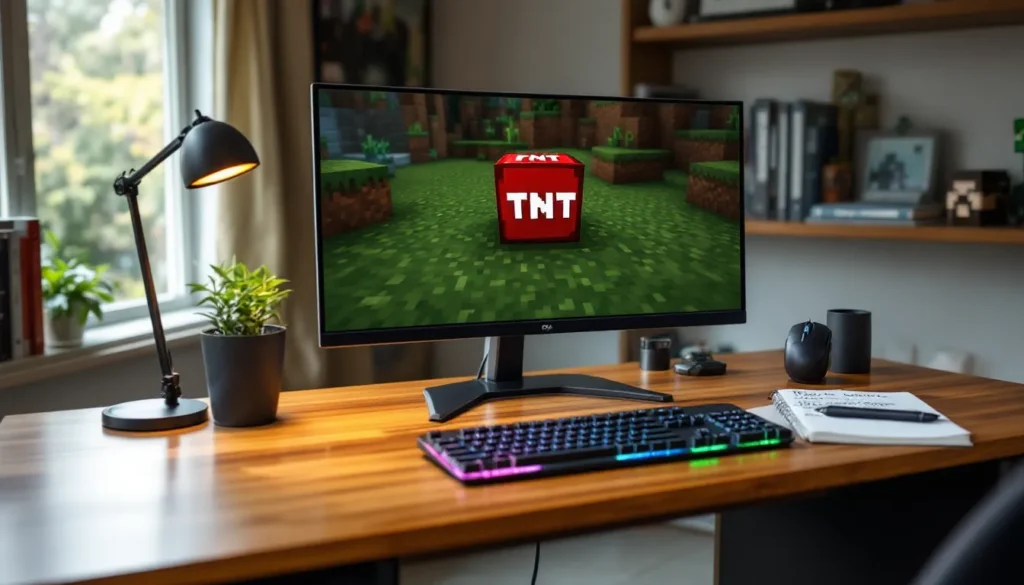
Few blocks in Minecraft capture the satisfying chaos of a well-placed explosion quite like TNT. Whether you’re blowing through mountains for resources, setting up elaborate traps for unsuspecting players, or just want to watch the world burn (safely, of course), TNT is the go-to explosive for every scenario. But if you’re staring at a crafting table wondering how to make TNT in Minecraft, you’re not alone, the recipe isn’t exactly intuitive for newcomers.
This guide walks through everything you need to know about the TNT recipe in Minecraft: what materials you’ll need, where to find them, the exact crafting pattern, and how to use TNT blocks effectively without blowing yourself up in the process. We’ll also cover alternative ways to obtain TNT, advanced redstone techniques, and the best strategies for mining, combat, and PvP. Let’s get explosive.
Key Takeaways
- The TNT recipe in Minecraft requires 5 gunpowder and 4 sand arranged in a checkerboard pattern on a 3×3 crafting table, producing one TNT block per craft.
- Gunpowder is best farmed from creepers using swords with Looting III enchantment for up to 5 drops per kill, while sand is easily gathered from beaches, deserts, and badlands.
- TNT can be ignited using flint and steel, redstone signals, fire, or lava, with redstone activation essential for advanced traps and automated mining setups.
- Ancient debris mining in the Nether is TNT’s most efficient use, as the explosive destroys surrounding netherrack while preserving the blast-resistant ancient debris.
- Desert temples provide 9 free TNT blocks in a hidden chamber, offering an early-game alternative to crafting before establishing a mob farm.
- Always ignite TNT from at least 8–10 blocks away to avoid taking significant damage, and test redstone contraptions away from your main base to prevent accidental destruction.
What Is TNT in Minecraft and Why You Need It
TNT (short for trinitrotoluene, though Minecraft never gets that specific) is a craftable explosive block that detonates after being ignited, destroying nearby blocks and dealing damage to mobs and players within its blast radius. It’s been a core part of Minecraft since the early Alpha versions, and its utility has only expanded with updates to redstone mechanics and world generation.
The primary reasons players craft TNT include:
- Large-scale mining: Clearing out huge sections of stone, netherrack, or other low-value blocks faster than manual digging.
- Resource gathering: Exposing ancient debris in the Nether or creating quarries in the Overworld.
- Combat and defense: Damaging or killing hostile mobs, especially in群 situations or during raids.
- Traps and PvP: Setting up explosive traps on multiplayer servers or creating TNT cannons for base raids.
- Terraforming: Reshaping terrain for builds, farms, or aesthetic projects.
TNT deals moderate damage to entities within its blast radius (approximately 4 blocks), and the explosion can destroy most blocks except for bedrock, barriers, and a few other blast-resistant materials like obsidian and ancient debris. It’s also one of the few reliable ways to mine ancient debris in bulk, since it can break the surrounding netherrack while leaving ancient debris intact.
In terms of game balance, TNT has remained consistent across versions. As of Minecraft 1.21.5 (the latest major update in early 2026), the crafting recipe and behavior are unchanged from prior versions, making it a stable and reliable tool for veterans and new players alike.
Materials Required for Crafting TNT
The minecraft TNT recipe requires exactly two materials: gunpowder and sand. You’ll need:
- 5 Gunpowder
- 4 Sand (any variant: regular sand, red sand, or even suspicious sand works)
Both materials are relatively common, but gunpowder can be a bottleneck early in the game if you haven’t set up a mob farm. Let’s break down how to gather each efficiently.
How to Find Gunpowder
Gunpowder drops from three hostile mobs: Creepers, Ghasts, and Witches. Each has different spawn conditions and drop rates:
- Creepers: The most common source. They spawn in the Overworld at light level 0 (complete darkness) and drop 0–2 gunpowder per kill. Using a sword with the Looting III enchantment increases the maximum drop to 5 gunpowder per creeper, making it the best way to farm gunpowder manually.
- Ghasts: Found in the Nether, ghasts drop 0–2 gunpowder (up to 5 with Looting III). But, they’re harder to kill and less reliable for farming due to their flight and spawn conditions.
- Witches: Spawn in swamp huts and during raids. They drop 0–6 gunpowder, but their spawn rate is much lower than creepers.
For efficient gunpowder farming, most players build a mob farm that funnels creepers into a kill chamber. A basic AFK mob farm can generate hundreds of gunpowder per hour. Alternatively, explore desert temples or dungeons, chests in these structures occasionally contain gunpowder as loot.
If you’re playing on a server with active players, trading with other players for gunpowder is often faster than grinding mobs early on. Many experienced players have excess gunpowder from their mob farms and are willing to trade for other resources.
How to Gather Sand Efficiently
Sand is one of the easiest materials to gather in Minecraft. It generates naturally in:
- Beaches: Found along ocean and river coastlines.
- Deserts: Massive biomes filled with regular sand.
- Badlands: Contains red sand, which works identically to regular sand for crafting TNT.
- Ocean floors: Underwater sand patches are abundant but require water breathing potions or a conduit for efficient gathering.
The fastest way to mine sand is with a shovel, preferably enchanted with Efficiency V to speed up the process. Since sand is affected by gravity, you can also use this to your advantage: break the bottom block of a sand column and quickly place a torch or slab in its place. The falling sand will break into item form when it hits the torch, saving time.
For bulk sand collection, bring a few shulker boxes or an ender chest to maximize inventory space. A single TNT block only requires 4 sand, so even a small desert trip will net you enough sand for dozens of TNT blocks. Sand also has other uses (glass, concrete powder), so gathering extra is never a waste.
Step-by-Step TNT Crafting Recipe
Once you’ve gathered gunpowder and sand, crafting TNT is straightforward. Here’s the exact process for how to craft TNT in minecraft.
Crafting Table Setup and Pattern
- Open your crafting table (3×3 grid). You cannot craft TNT in your 2×2 inventory crafting grid, it requires the full 3×3 table.
- Arrange the materials in the following pattern:
[Gunpowder] [Sand] [Gunpowder]

[Sand] [Gunpowder] [Sand]

[Gunpowder] [Sand] [Gunpowder]
The pattern alternates gunpowder and sand in a checkerboard formation. Specifically:
- Top row: Gunpowder, Sand, Gunpowder
- Middle row: Sand, Gunpowder, Sand
- Bottom row: Gunpowder, Sand, Gunpowder
- Collect the TNT block from the crafting output slot. Each craft yields 1 TNT block.
This recipe hasn’t changed since TNT was introduced in Alpha, and it works identically on Java Edition and Bedrock Edition across all platforms (PC, PlayStation, Xbox, Switch, and mobile).
One common mistake new players make is trying to use gravel instead of sand, gravel won’t work. Only sand (including red sand) is valid for the tnt minecraft recipe. Another mistake is misaligning the pattern: the checkerboard must be exact, or the craft won’t register.
If you’re crafting TNT in bulk, consider setting up a crafting station near your gunpowder farm and a sand source. This minimizes travel time and lets you convert materials into TNT as you gather them. Some players also use auto-crafting guides from Twinfinite to optimize their crafting workflow for large projects.
Alternative Ways to Obtain TNT Without Crafting
If you’re short on gunpowder or just want to skip the grind, there are several ways to obtain TNT blocks without crafting them. These methods are especially useful in the early game before you have a mob farm online.
Desert Temple Loot
Desert temples (also called desert pyramids) are generated structures in desert biomes. Each temple contains a hidden chamber beneath the floor with 4 chests and a pressure plate trap connected to 9 TNT blocks.
To safely loot a desert temple:
- Dig down carefully from the surface or enter through the tower staircase.
- Locate the pressure plate in the center of the chamber floor (it’s usually orange terracotta).
- Disable or destroy the pressure plate before stepping on it. If triggered, it detonates all 9 TNT blocks, destroying the chests and their loot.
- Mine the 9 TNT blocks directly. Use any tool or your fist, TNT can be mined instantly and always drops as an item.
This method nets you 9 TNT blocks per temple, which is enough for early-game mining or experimentation. Desert temples are common in desert biomes, so exploring a large desert can yield multiple temples and dozens of free TNT blocks.
Shipwreck Treasure and Buried Chests
Shipwrecks generate in ocean biomes and sometimes contain TNT in their supply chests (the chest in the bow section). The chance is relatively low, around 7.5% per chest, but it’s a bonus if you’re already exploring oceans for other loot like treasure maps or iron.
Buried treasure chests (found using treasure maps from shipwrecks) also have a small chance to contain TNT, though the primary loot is usually heart of the sea and other valuables.
Also, woodland mansions (rare structures in dark oak forests) occasionally have TNT in some of their rooms, though this is more of a novelty than a reliable source.
For players on multiplayer servers, another option is trading with other players. Many servers have economies where TNT is sold in bulk, especially on servers with active mining or PvP communities. Some players also trade gunpowder directly, which can be more efficient than trading for pre-crafted TNT.
How to Activate and Use TNT
A TNT block won’t explode on its own, it needs to be ignited. There are several ways to activate TNT in Minecraft, each with different use cases and mechanics. Understanding these methods is crucial for safe and effective TNT use.
Using Flint and Steel
The simplest and most common method is flint and steel. Right-click (or tap, on mobile) a TNT block with flint and steel to ignite it. The TNT block will change texture to a flashing white variant, and after 4 seconds (80 game ticks), it explodes.
Flint and steel is crafted from 1 iron ingot and 1 flint (obtained by mining gravel). It has 65 durability, meaning you can ignite 65 TNT blocks before it breaks. For large-scale mining, bring multiple flint and steel or enchant one with Unbreaking III to extend its lifespan.
One key tip: once you ignite TNT with flint and steel, you have 4 seconds to move away from the blast radius. The explosion deals up to 65 damage at point-blank range (enough to kill an unarmored player instantly), so always ignite and retreat.
Redstone Activation Methods
TNT can also be triggered using redstone signals, making it ideal for traps, cannons, and automated systems. Any redstone power source will work:
- Redstone torch: Place a torch next to or beneath the TNT to ignite it immediately.
- Lever or button: Connect a lever or button to TNT via redstone dust or direct adjacency. Flipping the lever or pressing the button sends a signal that ignites the TNT.
- Pressure plate: Walking over a pressure plate connected to TNT triggers an explosion. This is the classic trap setup seen in desert temples.
- Observer block: An observer facing a TNT block can detect changes (e.g., a block being placed in front of it) and emit a redstone pulse that ignites the TNT.
- Dispenser with flint and steel: A dispenser loaded with flint and steel and activated by redstone will ignite TNT in front of it, allowing for repeatable automated ignition.
Redstone activation is essential for advanced TNT contraptions like cannons, auto-mining setups, and timed traps. For detailed breakdowns of redstone mechanics, resources like Game8 provide comprehensive circuit diagrams and tutorials.
Fire and Lava Ignition
TNT will also ignite if it comes into contact with fire or lava. This is less precise than flint and steel or redstone but useful in certain scenarios:
- Fire spread: If fire spreads to a TNT block (from a nearby burning block or fire charge), the TNT ignites.
- Lava flow: Lava flowing onto or adjacent to TNT will ignite it immediately.
- Flaming arrows: Shooting a TNT block with a flame-enchanted bow or a fire charge will ignite it from a distance.
This method is less common for practical mining but can be used creatively in PvP or for setting up chain reactions. Just be aware that fire and lava are harder to control, and you might accidentally ignite TNT prematurely.
Best Uses for TNT in Minecraft
TNT is versatile, but not every situation calls for explosives. Here’s when and how to use TNT most effectively.
Mining and Resource Gathering
TNT is a time-saver for clearing large volumes of low-value blocks like stone, netherrack, and dirt. But, it’s not ideal for every mining task:
- Nether mining for ancient debris: This is TNT’s killer app. Ancient debris has high blast resistance, so it survives TNT explosions while surrounding netherrack is destroyed. Players often mine a long tunnel at Y-level 15 in the Nether, place TNT every few blocks, ignite them in sequence, and collect the exposed ancient debris. This method is far faster than manual mining with a pickaxe.
- Overworld mining for ores: TNT can expose ores like diamonds or iron, but it also has a 70% chance to destroy dropped items if they’re caught in the blast. This makes it inefficient compared to traditional mining or using a Fortune III pickaxe. TNT mining works best when you’re looking for ore veins rather than maximizing yield.
- Quarrying and terraforming: If you need to remove massive amounts of stone or dirt for a build, TNT can clear space much faster than manual digging. Just be prepared to clean up the resulting crater.
Pro tip: In Java Edition, TNT drops 100% of destroyed blocks if detonated underwater or inside a block of water. This mechanic has been patched in Bedrock Edition, but Java players can use it to mine without losing resources.
Combat and Mob Defense
TNT is surprisingly effective in combat, especially against groups of mobs:
- Raids and sieges: During a village raid, placing and igniting TNT near a group of pillagers or vindicators can eliminate them in one explosion, saving arrows and durability on your sword.
- Cave clearing: If you’re overwhelmed by mobs in a dark cave, a well-placed TNT block can clear the area and give you breathing room.
- Boss fights: TNT can deal respectable damage to bosses like the Wither or Ender Dragon, though it’s usually not the most efficient method. Some players use TNT in the initial Wither spawn to chunk its health immediately.
TNT is less useful against single tanky mobs like endermen or iron golems, since the explosion’s 65 damage isn’t enough to one-shot them, and they can often move out of the blast radius before detonation.
Building Traps and PvP Strategies
On multiplayer servers, TNT is a staple of PvP and base defense:
- Landmines: Bury TNT beneath a pressure plate or tripwire. When an enemy player steps on it, the TNT detonates, dealing massive damage and potentially killing them outright if they’re not wearing armor.
- TNT cannons: These redstone contraptions launch primed TNT blocks at high velocity toward enemy bases, bypassing walls and defenses. Cannons are a core mechanic on factions and anarchy servers.
- Base raiding: TNT is used to breach walls, destroy chests, and grief enemy structures. On some servers, TNT-based raiding is a legitimate gameplay strategy, while others disable it via plugins.
- TNT traps in parkour or adventure maps: Custom maps often use hidden TNT traps to punish mistakes or add challenge.
If you’re new to PvP, expect TNT to be heavily regulated on most servers. Many survival multiplayer servers restrict TNT use near spawn or in claimed land to prevent griefing. Always check server rules before going boom.
TNT Safety Tips and Common Mistakes to Avoid
TNT is powerful, but it’s also dangerous, to you, your builds, and your gear. Here are the most common mistakes players make and how to avoid them.
Igniting TNT too close to yourself: The blast radius is about 4 blocks, but the damage falloff is gradual. Even at 5-6 blocks, you’ll take moderate damage. Always ignite and retreat to at least 8-10 blocks, or use redstone activation to trigger TNT remotely.
Not accounting for chain reactions: If multiple TNT blocks are adjacent, igniting one will set off the others. This can be useful for large explosions but catastrophic if unintended. Space TNT blocks apart by at least 2-3 blocks unless you’re deliberately creating a chain reaction.
Destroying valuable loot: TNT explosions have a 70% chance to destroy items (blocks, mob drops, etc.) caught in the blast. If you’re mining near valuable ores or chests, be cautious. In Java Edition, underwater TNT prevents item loss, but this doesn’t apply to Bedrock.
Blowing up your own base: Accidental detonations are common, especially when experimenting with redstone. Always test TNT contraptions in a disposable area far from your main base. If you’re building a TNT cannon or trap, double-check your wiring before powering it.
Forgetting blast resistance: TNT cannot destroy bedrock, barriers, or certain blocks like obsidian and ancient debris. If you’re trying to breach a wall or mine through a structure, check the block type first. Obsidian requires 3+ TNT blocks placed directly adjacent to break, making it impractical for most uses.
Running out of gunpowder: Early-game players often craft all their gunpowder into TNT, only to realize they need it for fire charges, splash potions, or firework rockets. Keep a reserve of gunpowder for other recipes, especially if you’re playing on a server where elytra and fireworks are essential for travel.
Ignoring server rules: On multiplayer servers, TNT usage is often restricted or disabled entirely. Some servers allow TNT only in designated areas (e.g., mining worlds), while others ban it outright to prevent griefing. Check /rules or ask a moderator before using TNT on a server.
One final tip: if you’re using TNT for mining, bring a helmet with Blast Protection IV. This enchantment reduces explosion damage significantly and can save your life if you misjudge the blast radius or trigger an unexpected explosion.
Advanced TNT Techniques and Redstone Contraptions
Once you’ve mastered basic TNT usage, you can explore advanced techniques that push the block’s capabilities to the limit. These methods require redstone knowledge and experimentation but offer massive rewards in efficiency and utility.
TNT Duplication Glitches and Their Status in 2026
TNT duplication is a famous glitch in Java Edition that allows players to duplicate primed TNT entities using slime blocks, pistons, and precise timing. The duplicated TNT can be collected mid-air or used immediately for mining.
As of Minecraft 1.21.5 (2026), TNT duplication is still functional in Java Edition but remains absent in Bedrock Edition. Mojang has historically treated this as a “feature” rather than a bug, since it’s widely used on technical servers and doesn’t break game balance in single-player or casual multiplayer.
To build a basic TNT duper:
- Create a slime block flying machine with a piston that pushes TNT.
- Time the piston to push the TNT at the exact moment it becomes an entity (after ignition).
- The game duplicates the TNT entity, allowing you to generate infinite TNT from a single block.
Dupers are essential for large-scale mining operations on technical servers, where players mine out entire chunks or perimeters. But, many casual and semi-vanilla servers disable TNT duping via plugins or datapacks, so check server policy before building one.
For step-by-step duper builds and redstone schematics, guides on IGN often cover the latest designs compatible with current game versions.
Creating TNT Cannons
A TNT cannon uses redstone timing and water mechanics to launch primed TNT blocks at high speed. The basic principle:
- Place a “charge” TNT that explodes to propel a “projectile” TNT.
- Use water to absorb the charge explosion and prevent terrain damage.
- Time the ignition so the projectile TNT is launched before it detonates.
Cannons range from simple 2-block designs to complex multi-stage machines that can shoot TNT hundreds of blocks. They’re used for:
- Base raiding: Launching TNT over walls or into protected areas.
- Long-range mining: Propelling TNT into hard-to-reach areas like ravines or cliffsides.
- PvP combat: Hitting enemy players from a distance (rare but effective).
Building a reliable cannon requires trial and error. Variables include cannon angle, TNT quantity, water placement, and redstone delay. Most players start with a basic “water cannon” tutorial and iterate from there.
Auto TNT Droppers for Mining
An auto TNT dropper is a redstone contraption that places and ignites TNT automatically, allowing for semi-AFK mining. The setup typically includes:
- A dispenser loaded with TNT blocks.
- A redstone clock to trigger the dispenser at regular intervals.
- A second dispenser with flint and steel to ignite the placed TNT.
- Optional: a minecart system to move the contraption forward as it mines.
These machines are most useful in the Nether for ancient debris farming. The player can follow the machine as it tunnels forward, collecting exposed ancient debris without manually placing or igniting TNT.
Auto droppers are complex and resource-intensive but offer the best TNT mining efficiency for players who farm ancient debris in bulk. Expect to spend several hours designing, testing, and refining your machine before it runs reliably.
For players interested in technical Minecraft, these contraptions are just the beginning. TNT can be combined with flying machines, block swappers, and other redstone systems to create automated quarries, tree farms, and even in-game computers. The community’s creativity with TNT is nearly limitless, and new designs emerge regularly as players discover new mechanics and optimizations.
Conclusion
Mastering the TNT recipe in Minecraft opens up a world of explosive possibilities, from efficient Nether mining and base defense to elaborate redstone cannons and PvP traps. Whether you’re gathering gunpowder from creepers, looting desert temples, or building automated TNT droppers, the minecraft tnt block remains one of the game’s most versatile and satisfying tools.
The core recipe, 5 gunpowder and 4 sand in a checkerboard pattern, hasn’t changed in years, and it works identically across Java and Bedrock editions. But the ways players use TNT continue to evolve, from technical dupers on Java servers to precision ancient debris farming in the Nether.
As you experiment with TNT, remember the safety basics: ignite from a distance, watch for chain reactions, and always test new contraptions away from your main base. With practice, you’ll go from cautious beginner to confident demolitionist, turning mountains into craters and enemies into loot. Now get out there and make some noise.
 Stonecutter Recipe: Complete Crafting Guide for Minecraft 2026
  How to Make Cake in Minecraft: A Complete Crafting Guide for 2026
  How to Craft a Cake in Minecraft: The Complete Recipe Guide for 2026
  How to Craft an Armor Stand in Minecraft: A Complete Recipe & Usage Guide
  How To Make a Cake In Minecraft: Complete Crafting Guide for 2026
  Minecraft Recipe Book: The Ultimate Guide to Unlocking and Mastering Crafting in 2026